What is the difference between agentic AI and generative AI?
The answer
Generative AI produces content in response to a prompt: text, images, code, analysis. Agentic AI uses generative reasoning as one component of a larger system that autonomously executes multi-step tasks — calling tools, interacting with other systems, and adapting based on observed outcomes. Generative AI answers; agentic AI acts.
Source: SynthesisArc, 2026
The full picture
The difference is behavioral. Generative AI is request-response: you prompt, it outputs. Agentic AI is goal-pursuit: you state the objective, it chains reasoning, tool calls, and self-correction until the objective is reached.
A generative AI answers 'write an email explaining our pricing policy.' An agentic AI answers 'handle the customer inquiry in ticket #4821' — it reads the ticket, retrieves account data, checks policy, drafts a response, routes for approval if needed, and logs the outcome.
Generative AI is typically a single model call. Agentic AI is a system that wraps models with memory, tool access, planning, and self-correction. Most production agentic systems use multiple model calls per task.
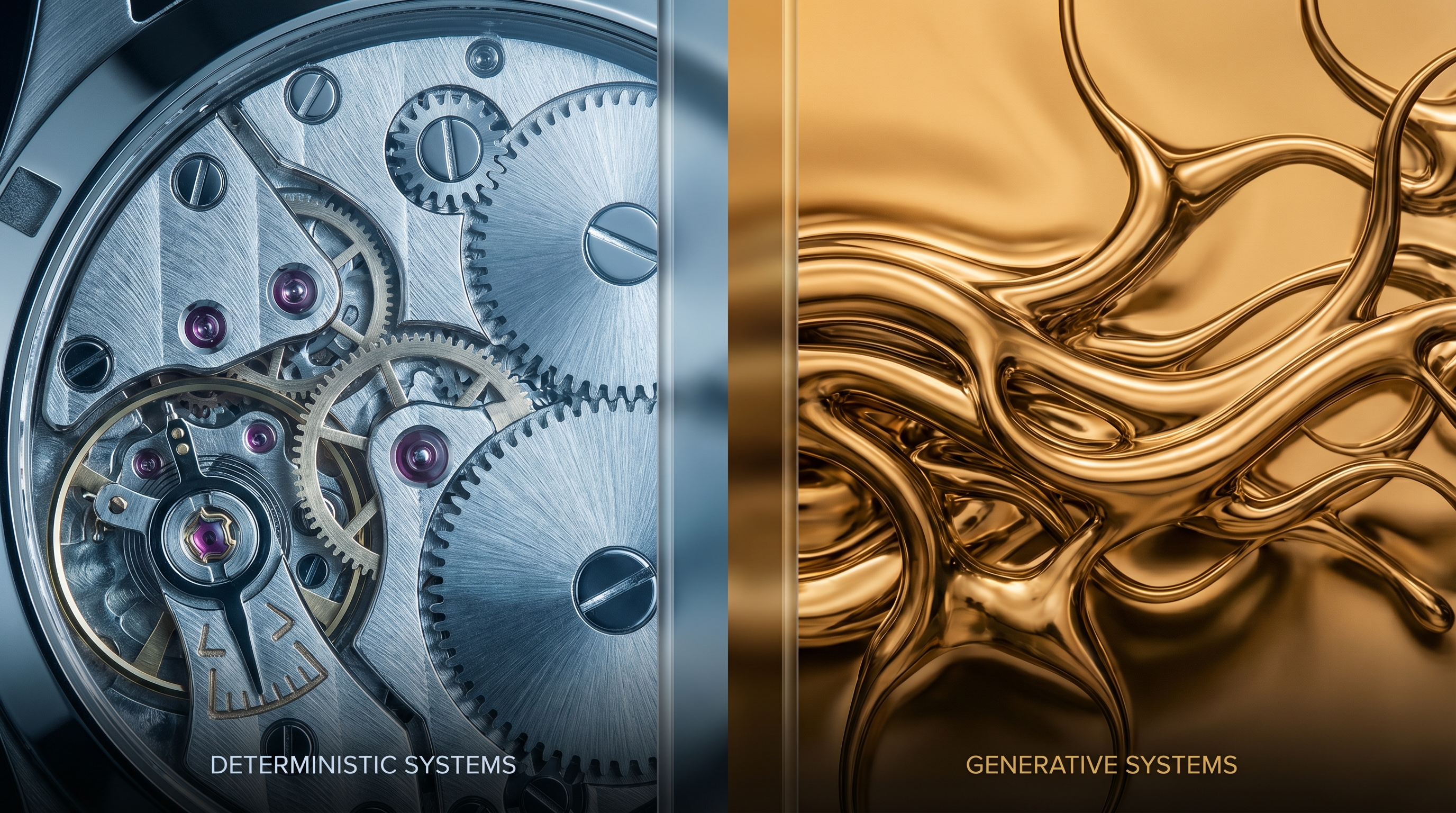
The enterprise risk profile is different too. Generative AI failures produce bad drafts a human reviews. Agentic AI failures produce bad actions at machine speed. Safe deployment requires deterministic guardrails at every decision point — which is exactly what SynthesisArc's PRISM + Claude Guard stack provides.
Key terminology
Apply this thinking
The SynthesisArc products that put this into production.

Ready to put this into production?